Surgeons can now see the tumour.
POSICS gives surgeons real-time visual guidance during cancer surgery so they can see tumoral tissue, guide removal precisely, and confirm completeness before closing.
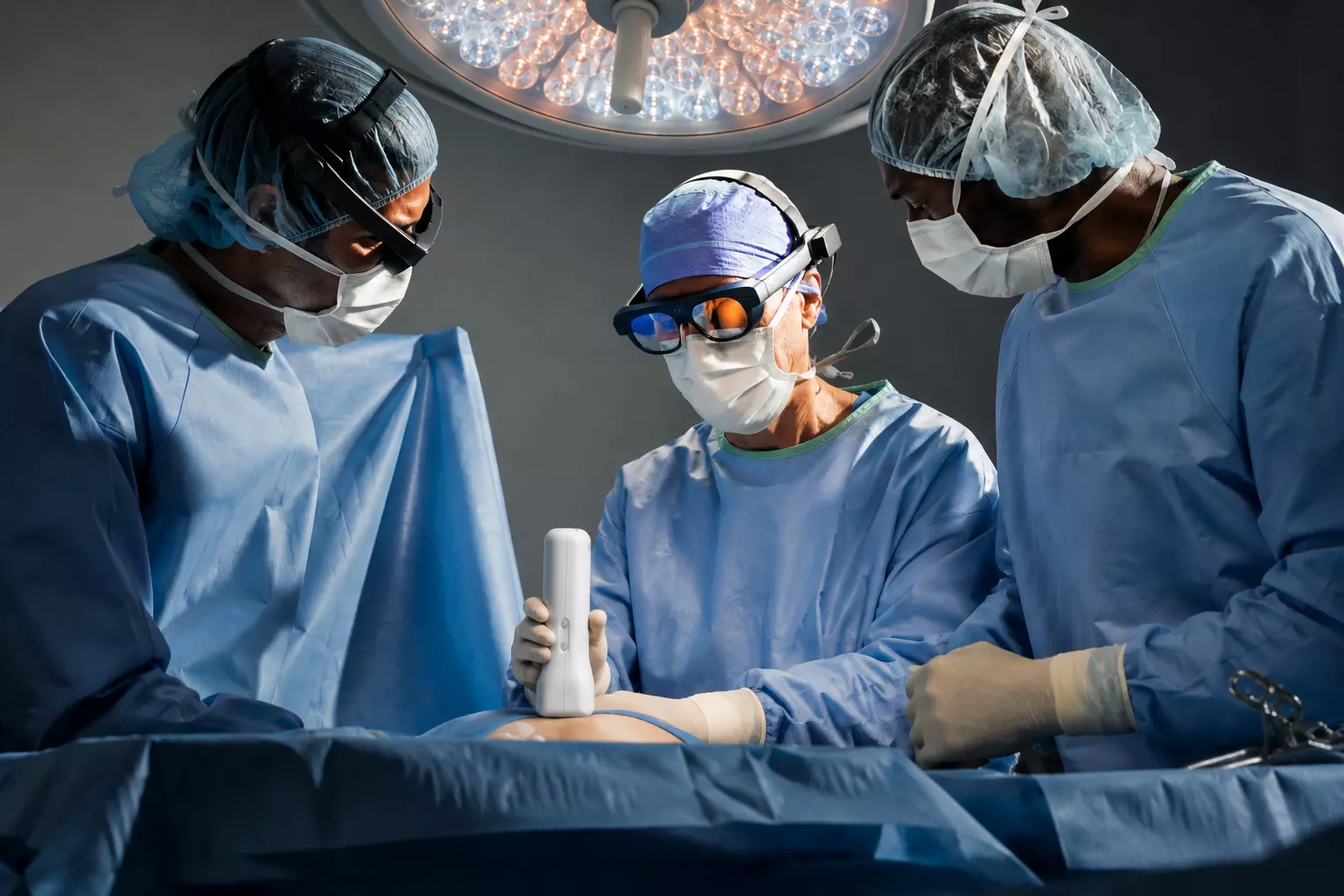
Until now, surgeons must still infer where the tumour is.
Across high-stakes professions, technology has repeatedly transformed decisions by turning what professionals had to interpret into information they can see directly. POSICS brings this same shift to the operating room.
Indirect signals. Acoustic beeps.
Uncertainty.
Surgeons rely on pre-operative scans and acoustic camera feedback to estimate tumour position. At the moment of cutting and when checking completeness, there is no direct visual information. Every decision is an inference.
See the tumour. Guide removal. Verify completeness.
The POSICS camera is placed externally on the patient's body. The surgeon puts on AR glasses and sees a real-time overlay of tumoral tissue, directly mapped onto the surgical field. No inference. No guessing. Direct visualisation.
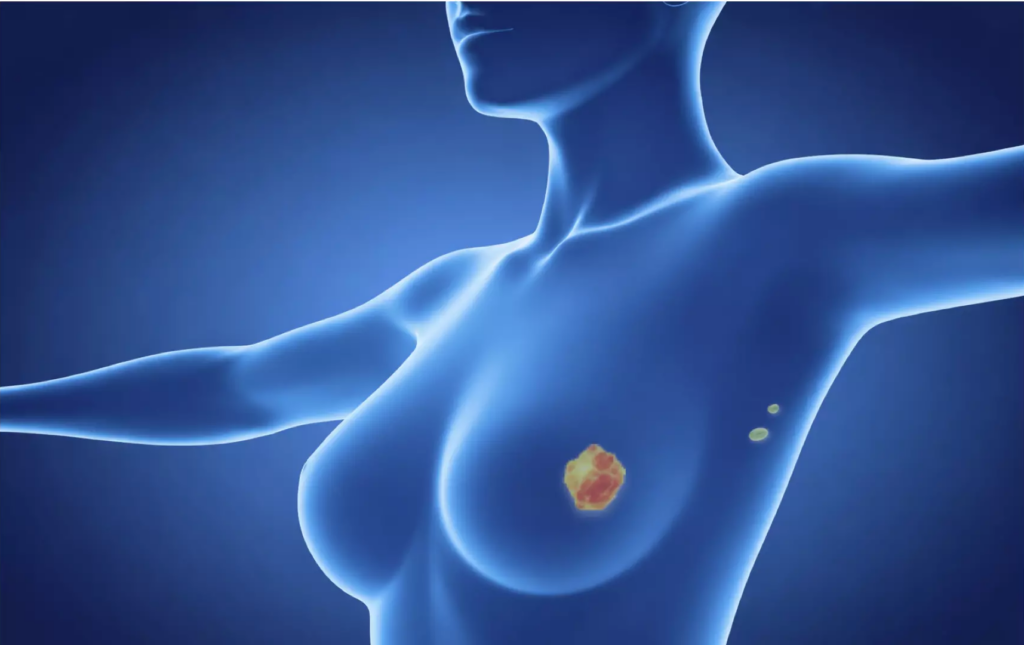
See tumoral tissue as you operate.
The external camera detects the radio-tracer signal and provides an immediate visual map of the tumour, directly visible through AR glasses, without interrupting the surgical act.
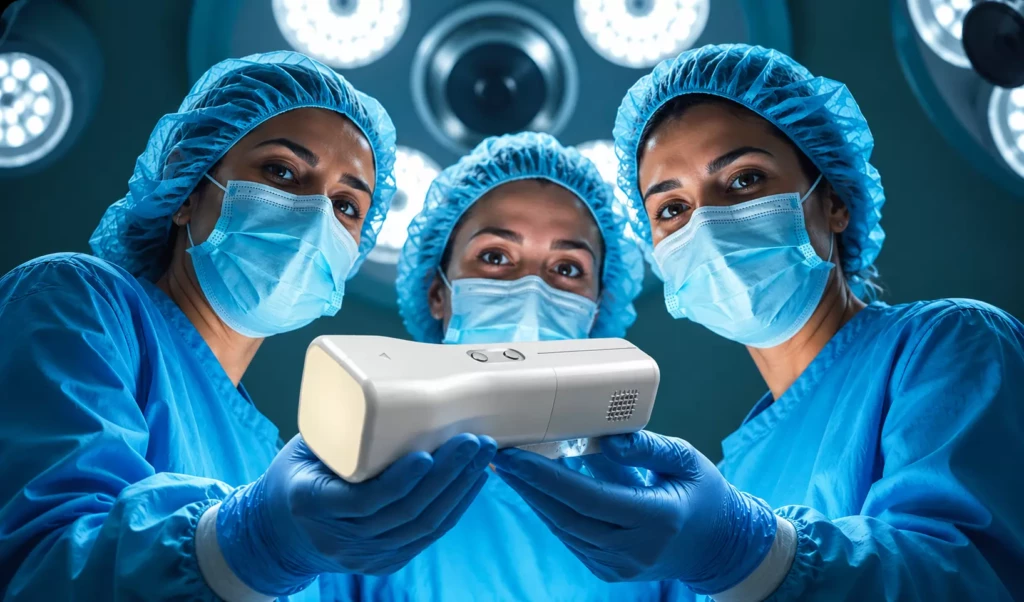
Know when removal is complete.
After excision, the surgeon can hold the camera over the surgical site to confirm no tumoral tissue remains. A critical check that previously depended on post-operative pathology.
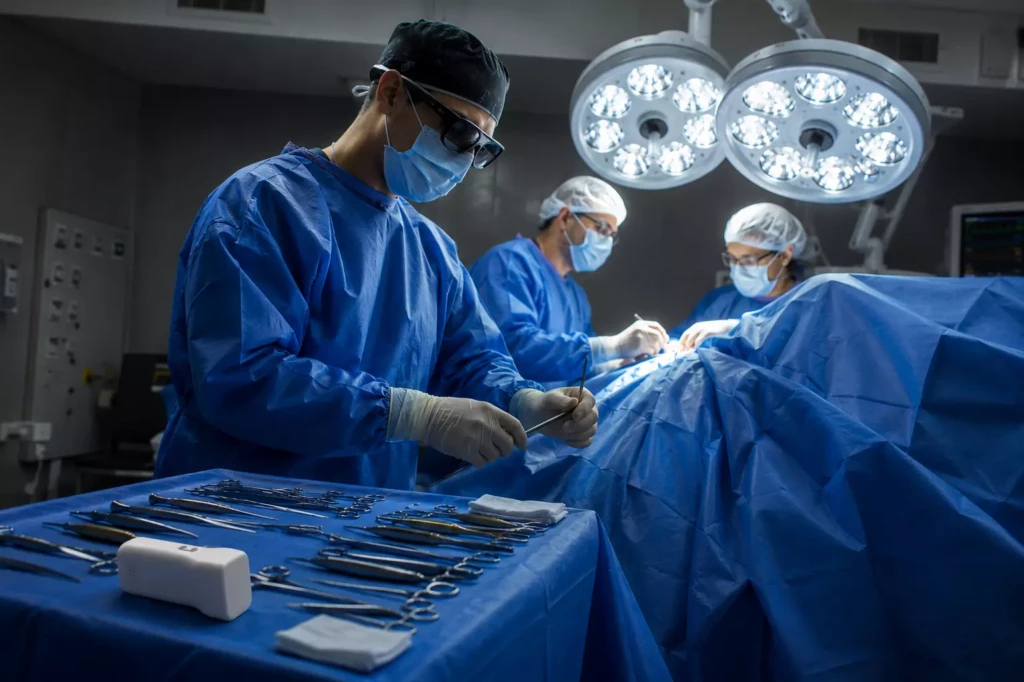
Fits the way surgeons already operate.
POSICS complements existing pre-operative imaging. It doesn't replace the MRI or the CT scan, it brings that information into the surgical act, at the moment critical decisions are made.
Backed by Switzerland's
leading institutions.
The technology is ready. Clinical trials are next.
Whether you are a surgeon, a hospital, or an investor, we want to hear from you.